
Las Vegas, Nevada
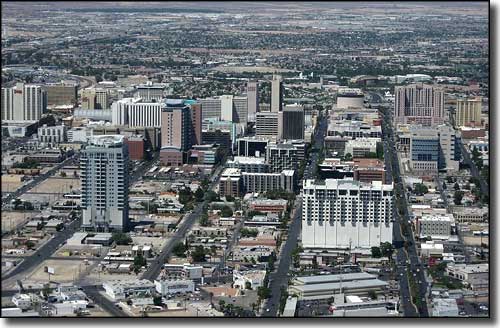
Downtown Las Vegas, from the top of Stratosphere
"Las Vegas" means "the meadows," and the area was given the name by travelers in the Antonio Armijo party as they journeyed along the old Spanish Trail in the early 1800's. In those days, the Las Vegas Valley had several natural artesian wells flowing that supported extensive grassy meadows on the valley floor. John C. Fremont traveled through the Las Vegas Valley in early May, 1844, while the area was still part of Mexico. In 1855, Brigham Young of the LDS Church in Salt Lake City sent 30 Mormon missionaries to the valley to attempt to convert the local Paiute population to Mormonism. They built a fort near what is now downtown but they abandoned the project 2 years later when the US Army started to build up their presence in Utah in preparation for the Mormon War. That original fort area is now the Old Las Vegas Mormon State Historical Park.
What really put what is now Las Vegas on the map was an auction on May 15, 1905. The San Pedro, Los Angeles & Salt Lake Railroad owned by Montana Senator William A. Clark auctioned off 110 acres in the present-day downtown area. That allowed a town to grow in the area around the railroad station. At first, Las Vegas grew as a mine staging and supply point. Las Vegas became incorporated as a city in 1911.
Gambling was legalized in Nevada in 1931 but the growth of gaming was slow until the mob started to take advantage of the opportunities. Hoover Dam was completed in 1936. Bugsy Siegel opened the Flamingo Hotel on what would become the Las Vegas Strip on the day after Christmas, 1946. The mob controlled most Las Vegas casinos until Howard Hughes started buying into the business in the late 1960's. That was when legitimate corporations also started buying in and the mob either went legal (a la "The Godfather") or was run out.
There was above-ground nuclear testing going on through the 1950's at the Nevada Test Site, maybe 50 miles northwest of Las Vegas. Then Nellis Air Force Base was established and built up. Between the influx of tourist dollars and military personnel, Las Vegas began that rise to where it is now: the most populous city in the U.S. founded in the 20th century. Las Vegas is still a growing family and retirement city but the housing foreclosure and global financial crisis have hit the city hard.
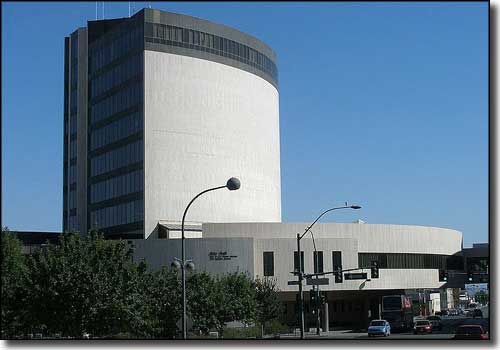
Las Vegas City Hall
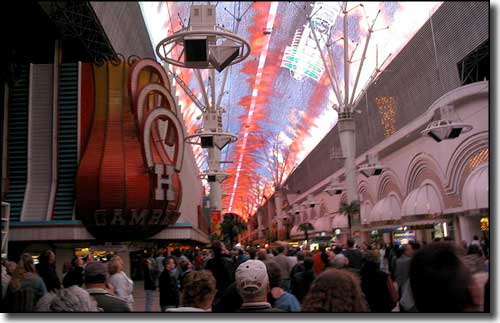
The Fremont Street Experience in downtown Las Vegas
Zip Codes: 89101-89199
Incorporated: March 16, 1911
Elevation: 2,001'
Latitude: 36.176°N
Longitude: 115.137°W
Resident Racial Breakdown:
White Non-Hispanic: 58.0%
Hispanic: 23.6%
African-American: 10.4%
Native American: 1.5%
Other: 9.7%
Two or More Races: 4.1%
Filipino: 2.3%
Chinese: 0.6%
Other Asian: 0.6%
Japanese: 0.5%
Education:
High School or Higher: 78.5%
Bachelor's Degree or Higher: 18.2%
Graduate or Professional Degree: 6.5%
Population: 567,641
Males: 288,400
Females: 279,241
Median Resident Age: 34.5 Years
Estimated Median Household Income: $53,097
Estimated Median Home Value: $267,400
Population Density: 5,010 People per Square Mile
2009 Cost of Living Index for Las Vegas: 91.4
Major Industries:
Lodging & Food Services, Entertainment & Recreation, Construction, Health Care, Educational Services, Finance & Insurance Services, Professional Services, Light Manufacturing, Transportation Services, Government, Waste Management Services
Unemployed: 7.0%
Clark County Related Pages
Mesquite - North Las Vegas - Clark County
Old Las Vegas Mormon State Historic Park -
Valley of Fire State Park - Big Bend of the Colorado Recreation Area
Spring Mountain Ranch State Park - Las Vegas Ski & Snowboard Resort
Other Clark County Related Pages
Red Rock Canyon Scenic Byway - Valley of Fire Scenic Byway
Mt. Charleston Scenic Byway - Bitter Springs Back County Byway
Gold Butte Back Country Byway - Desert National Wildlife Refuge
Black Canyon of the Colorado Wilderness - Bridge Canyon Wilderness
Eldorado Mountains Wilderness - Ireteba Peaks Wilderness- Jimbilnan Wilderness
La Madre Mountain Wilderness - Mount Charleston Wilderness - Nellis Wash Wilderness
Pinto Valley Wilderness - Rainbow Mountain Wilderness - Spirit Mountain Wilderness
Jumbo Springs Wilderness - Lime Canyon Wilderness - Wee Thump Wilderness
North McCullough Mountains Wilderness - South McCullough Mountains Wilderness
Nevada Pages

